
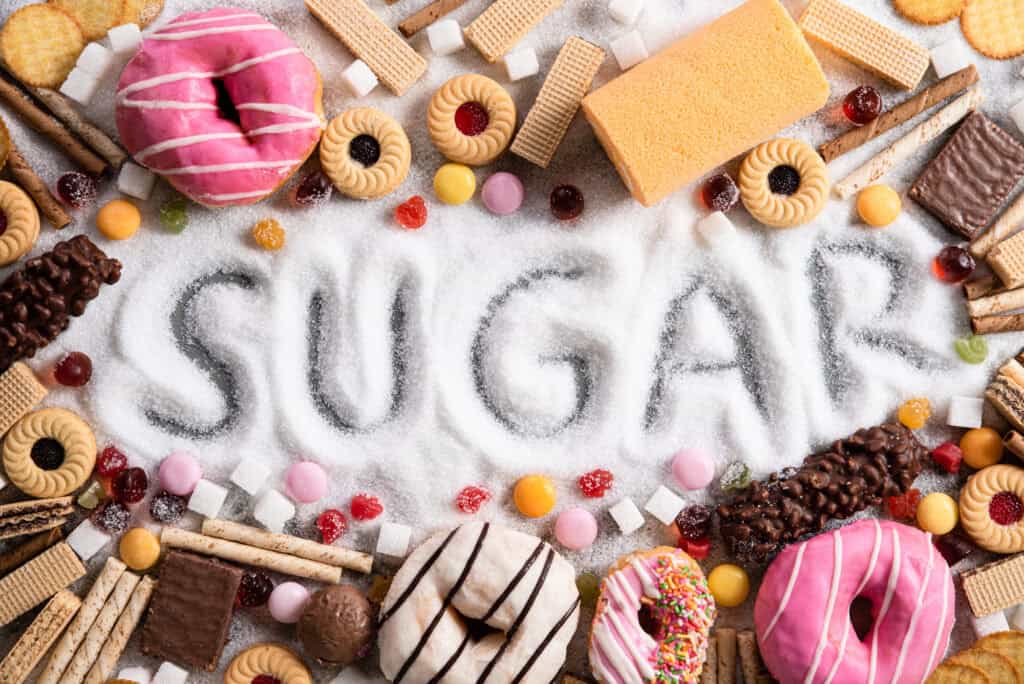
Ever find yourself reaching for a cookie when you’re not even hungry?
Or telling yourself “just one more piece” and suddenly the whole chocolate bar is gone?
If so, you might have a sugar addiction—and trust me, you’re not alone. Sugar is sneaky, showing up in everything from bread to salad dressing, making it incredibly easy to overconsume. And once your body gets used to that sweet fix, breaking free feels almost impossible.
But here’s the thing: too much sugar wreaks havoc on your body and mind. If you’ve been feeling sluggish, dealing with stubborn weight gain, or constantly battling cravings, it might be time to rethink your sugar intake.
Let’s dive into the signs of sugar addiction and, more importantly, how to break free without feeling miserable.
Signs You Might Be Addicted to Sugar
Wondering if you have a sugar addiction? Here are some telltale signs:
- You crave sweets daily. If skipping dessert feels like torture, your body may be dependent on sugar.
- You experience energy crashes. That afternoon slump after a sugar-packed breakfast? Blame the blood sugar rollercoaster.
- You eat sugar even when you know it’s bad for you. Maybe you’ve promised to cut back, but somehow, sugar always finds its way back onto your plate.
- You feel irritable or moody without it. Sugar withdrawal is real—irritability, headaches, and fatigue can all hit when you try to quit.
- You use sugar to boost your mood. Stressful day? Ice cream. Bored? Candy. Sound familiar? Sugar often becomes a comfort crutch.
If any (or all) of these sound like you, don’t worry—you’re not doomed! The first step is recognizing the problem, and that means you’re already on your way to change.
Why Do You Crave Sugar?
So why is it so hard to quit sugar? Blame your brain.
When you eat sugar, your brain releases dopamine, the same “feel-good” chemical triggered by addictive substances like drugs and alcohol. The more sugar you consume, the more your brain craves that dopamine hit. Over time, you need more and more sugar to get the same pleasure, leading to a vicious cycle.
On top of that, sugar messes with your blood sugar levels. You get an initial energy spike, but once your blood sugar crashes, you’re left feeling tired and irritable—so you reach for more sugar. It’s a never-ending loop designed to keep you hooked.
The food industry knows this, too. That’s why sugar is hidden in so many processed foods—it keeps you coming back for more. But you don’t have to stay trapped in this cycle!
How Sugar Affects Your Body and Mind
Sure, sugar tastes amazing, but it’s not doing your body any favors. Here’s what too much sugar can do:
- Leads to weight gain – Excess sugar gets stored as fat, especially around your belly.
- Increases your risk of disease – Too much sugar can lead to insulin resistance, increasing your risk of diabetes and heart disease.
- Causes inflammation – Chronic inflammation from sugar can contribute to joint pain, skin issues, and even autoimmune diseases.
- Messes with your brain – Brain fog, mood swings, and difficulty concentrating are all linked to sugar overload.
- Weakens your immune system – Sugar feeds bad gut bacteria, making you more likely to get sick.
Yikes, right? The good news is that cutting back on sugar—even just a little—can make a huge difference in how you feel.
How to Reduce Sugar Without Feeling Deprived
Giving up sugar sounds scary, but it doesn’t have to be. You don’t need to quit cold turkey or live a joyless, dessert-free life. Here are some simple ways to cut back without feeling like you’re missing out:
- Start reading labels. Sugar hides in unexpected places—bread, pasta sauce, yogurt, even “healthy” granola bars. Check ingredients and opt for lower-sugar versions.
- Switch to natural sweeteners. Try raw honey, maple syrup, or stevia instead of white sugar. They still add sweetness but come with added nutrients.
- Eat more protein and healthy fats. They help stabilize blood sugar and keep you full longer, reducing those sugar cravings.
- Drink more water. Sometimes, sugar cravings are actually just dehydration in disguise. Next time you want something sweet, try drinking a glass of water first.
- Keep healthy snacks on hand. Nuts, seeds, berries, and dark chocolate (with at least 70% cocoa) can satisfy cravings without the sugar overload.
- Practice mindful eating. Ask yourself: “Am I actually hungry, or just bored/stressed?” Finding alternative ways to cope with emotions can help break the sugar habit.
Small changes add up. The goal isn’t perfection—it’s progress!
Final Thoughts…
Breaking free from sugar cravings isn’t about deprivation—it’s about taking control of your health and energy.
Will it be easy? Not always. But the benefits? More energy, better skin, a clearer mind, and a body that feels good.
Start small. Swap out one sugary habit at a time, and celebrate every win. Before you know it, those intense sugar cravings will fade, and you won't miss it as much.
So, are you ready to kick sugar to the curb? Once you make that decision, your future self will thank you. 💪✨
